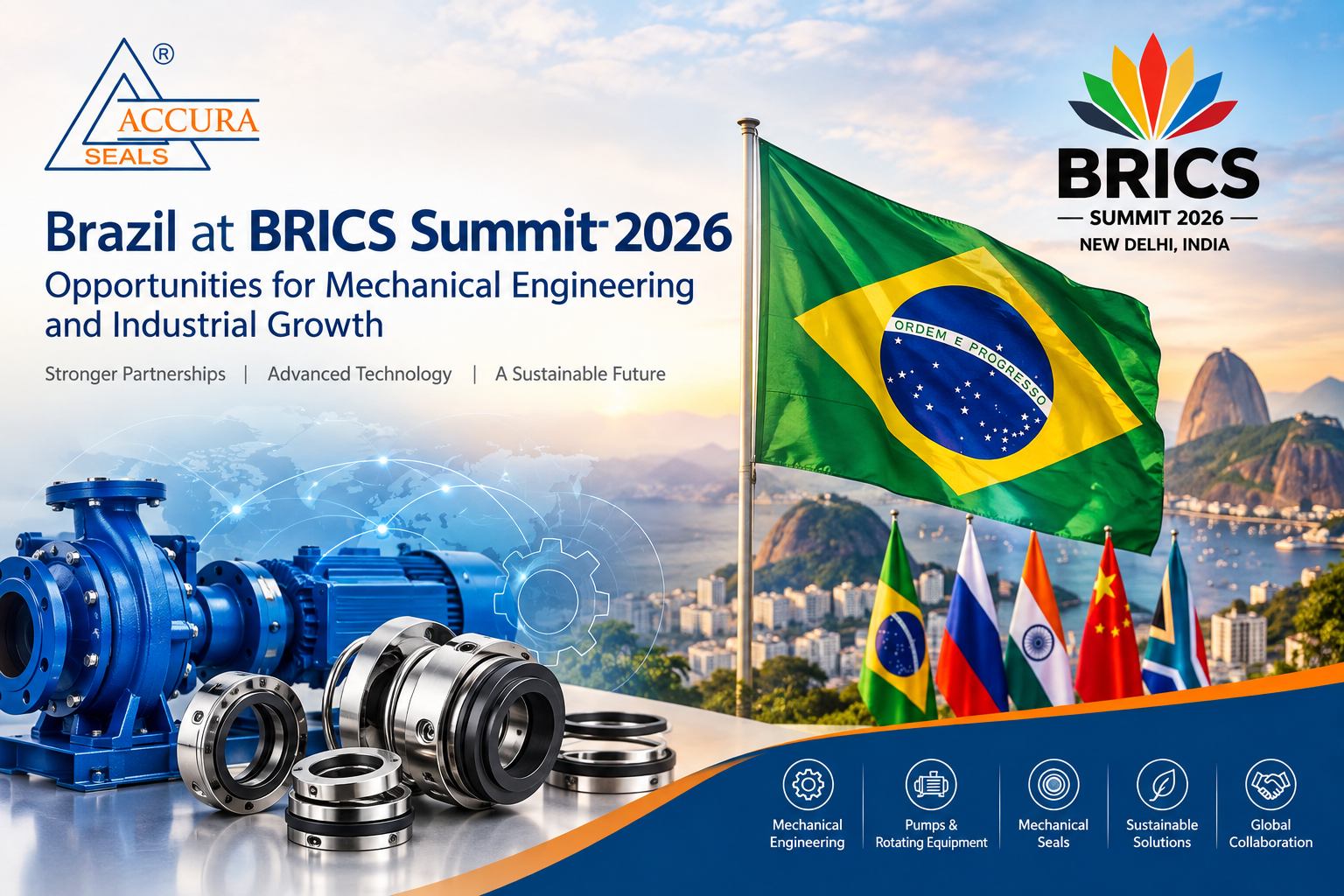
The ongoing BRICS Summit 2026 in New Delhi is bringing together major emerging economies to strengthen cooperation in trade, investment, energy, technology, sustainability and critical supply chains.
For Brazil, one of the founding BRICS members, the summit is not only a platform for diplomatic and economic cooperation. It also creates opportunities for industrial sectors such as mechanical engineering, energy infrastructure, manufacturing, pumps, rotating equipment and industrial maintenance.
As BRICS increasingly focuses on resilience, innovation, cooperation and sustainability, engineering industries across member countries could benefit from stronger technological collaboration and cross-border industrial partnerships.
Brazil's Role in BRICS 2026
Brazil continues to be an important voice within BRICS. The country brings significant expertise in agriculture, energy, mining, manufacturing and infrastructure.
At the 2026 summit, Brazil is participating alongside the other BRICS members as the group discusses ways to strengthen economic cooperation and address challenges affecting global supply chains, energy security, technology and sustainable development.
BRICS 2026 can create significant opportunities for the mechanical engineering sector by strengthening trade, technology exchange, industrial collaboration, and access to emerging markets among member countries.
For the mechanical engineering industry, stronger BRICS cooperation can also support more resilient supply chains, innovation, knowledge sharing, and sustainable industrial development.
For engineering industries, these discussions are particularly relevant because reliable infrastructure and industrial equipment are essential for energy production, manufacturing, water management, processing plants and transportation systems.
How BRICS Cooperation Can Benefit Brazil's Mechanical Engineering Sector
1. Greater Industrial Cooperation
Stronger relationships between BRICS countries can create opportunities for engineering companies to cooperate on industrial projects, equipment manufacturing, maintenance and technology development.
Brazilian companies could potentially benefit from partnerships with engineering and manufacturing companies across India, China, Russia, South Africa and other BRICS economies.
This could encourage the exchange of technical knowledge, manufacturing capabilities and engineering solutions.
2. Opportunities for Pump and Rotating Equipment Industries
Pumps and rotating equipment are essential across many industries, including:
- Oil and gas
- Power generation
- Water and wastewater
- Chemical processing
- Mining
- Food processing
- Manufacturing
- Agriculture
- Renewable energy
As BRICS countries invest in infrastructure and industrial capacity, demand for reliable pumping systems and supporting components can increase.
Mechanical seals are an important part of this ecosystem because they help prevent leakage in rotating equipment such as centrifugal pumps, mixers and other rotating machinery.
3. Energy Infrastructure and Mechanical Engineering
Energy security is one of the major areas being discussed during the 2026 BRICS agenda.
Brazil is an important energy producer, while BRICS countries collectively have major interests in oil, gas, electricity, hydropower, renewable energy and other energy technologies.
For mechanical engineering, this creates opportunities in areas such as:
- Pump systems
- Valves and piping
- Mechanical seals
- Turbomachinery
- Heat-transfer equipment
- Maintenance systems
- Power-generation equipment
- Industrial automation
More resilient energy infrastructure requires equipment that can operate reliably under demanding industrial conditions.
4. Stronger Focus on Industrial Sustainability
Sustainability is another major pillar of India's 2026 BRICS chairship.
For mechanical engineering, sustainability is increasingly connected with equipment efficiency, reduced leakage, longer component life and better maintenance practices.
Mechanical seals can contribute to these objectives by helping control leakage from rotating equipment and supporting efficient operation.
For industries handling water, chemicals, hydrocarbons or other process fluids, reducing leakage can improve operational efficiency while also supporting environmental and workplace safety objectives.
5. Technology and Engineering Innovation
The BRICS 2026 agenda places significant emphasis on innovation and technology.
This could accelerate interest in advanced engineering technologies such as:
- Smart monitoring systems
- Predictive maintenance
- Industrial IoT
- Condition monitoring
- Advanced materials
- Energy-efficient machinery
- Digital manufacturing
- AI-assisted industrial systems
For pump and mechanical-seal manufacturers, these technologies could transform how equipment is monitored and maintained.
Instead of waiting for equipment failure, industries can increasingly use condition-monitoring technologies to identify vibration, temperature, pressure and leakage-related issues earlier.
6. Critical Supply Chains and Engineering Components
The 2026 BRICS discussions also emphasize resilience in critical supply chains.
This is particularly important for mechanical engineering because industries depend on the continuous availability of critical components such as bearings, valves, pumps, seals, motors and other spare parts.
Greater cooperation between BRICS economies could support more diversified supply chains and create opportunities for manufacturers to develop regional sourcing and production partnerships.
For industries operating large plants, reliable access to replacement components can reduce maintenance delays and equipment downtime.
Brazil-India Engineering Opportunities
Brazil and India have complementary industrial strengths, creating opportunities for cooperation in areas such as:
- Industrial machinery
- Pumps and pumping systems
- Energy equipment
- Process industries
- Water infrastructure
- Mining equipment
- Agricultural machinery
- Manufacturing technology
- Industrial maintenance
Engineering companies in both countries could benefit from greater business-to-business cooperation, technology exchange and industrial partnerships.
What This Could Mean for Mechanical Seal Manufacturers
The growing emphasis on industrial resilience and infrastructure creates an important opportunity for mechanical-seal manufacturers.
Mechanical seals are used in numerous rotating applications where preventing fluid leakage is essential.
Industries such as chemical processing, power generation, oil and gas, water treatment and manufacturing require dependable sealing solutions to maintain equipment performance.
As industrial projects expand across BRICS economies, the demand for application-specific sealing solutions may also grow.
The opportunity is not simply about supplying a component. It is about providing engineering solutions that consider equipment design, operating conditions, pressure, temperature, fluid characteristics, speed and maintenance requirements.
The Future of Engineering Cooperation Under BRICS
The 2026 summit demonstrates how BRICS cooperation is expanding beyond traditional trade discussions into areas involving technology, resilience, sustainability, energy and supply chains.
For mechanical engineering, this could translate into greater opportunities for:
Technology exchange + Industrial partnerships + Local manufacturing + Sustainable engineering + Reliable maintenance
Together, these areas can strengthen industrial capabilities across BRICS economies.
Conclusion
Brazil's participation in the BRICS Summit 2026 is significant not only from an economic and geopolitical perspective but also from an industrial and engineering standpoint.
Contact us at
Website: www.accuraseals.com
Email: info@accuraseals.com
WhatsApp/phone: 9920374837